Overview
 sistemi Skalar Robotics sono configurabili ed equipaggiabili a misura del cliente, rispondendo alle esigenze più diverse. L'ottima qualità costruttiva e la completa flessibilità ne fanno un compagno ideale in ogni laboratorio di analisi. Gli strumenti sono configurabili con una capacità variabile di campioni e con diversi misuratori di parametri, i parametri di interesse possono essere analizzati contemporaneamente. Alcuni parametri: BOD, COD, pH, EC, Torbidità, Tutti i parametri da elettrodo iono-selettivi, Colore, Alcalinità, Parametri da titolazione
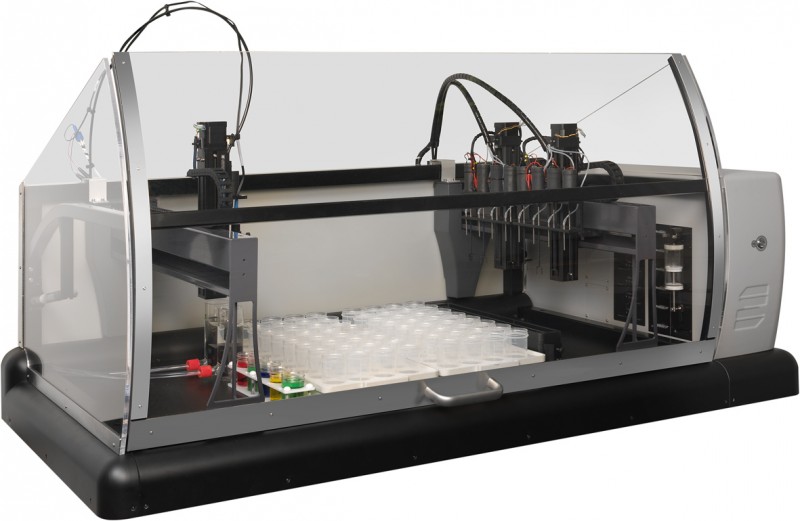
The modular design and flexible user-defined automation allows the instruments to meet your exact requirements resulting in increased productivity and accuracy of results, while reducing the sample turn-around time, costs per sample and eliminating errors and operator/sample interaction.
The instruments can be built with one or two robotic arms giving a total of 8 independent movable manipulators. With this second arm it is for instance possible to increase the sample throughput by using multiple probes or to perform two applications at the same time such as BOD and COD or other combinations.
The complete platform is enclosed with a protective front and side covers to comply with applicable CE regulations. The analyzers are controlled by RoboticAccessTM, a very practical software package, including pre-set application files, analyses scheduler, user definable sample table set up, user definable print & export options to LIMS/Excel and extensive QC features.
The SP2000 platforms are upgradeable and can be modified according your changing needs, making your initial investment even more valuable.
BOD
L'analisi del BOD è uno delle più comuni applicazioni per i laboratori acqua. Il sistema Skalar BOD effettua l'analisi secondo tutti i metodi e le norme nazionali, EPA 405,1, ISO 5815-1, EN-1899-1/2, Standard Methods 5210 B, DIN 38409; inoltre é possibile sviluppare un metodo su misura per il cliente. Il sistema base é costituito da una manipolazione a controllo XYZ, un rack per le bottiglia con 18 posizioni per flaconi BOD, una sonda per misura d'ossigeno (ottica o elettrochimica), diluitore automatico e dispensatore per aggiunta inoculo e inibitore, agitatore.
 The basic system:
In aggiunta a questa configurazione di base sono disponibili i seguenti optional per automatizzare ulteriori step del processo di misura:
-
decapping - capping Automatico
-
pipettaggio automatico campione
-
riempimento bottiglia
-
correzione del pH
I sistemi possono essere espansi per contenere fino ad un massimo di 11 rack (198 bottiglie) per BOD e per l'utilizzo di più sonde di ossigeno al fine di consentire una maggiore produttività. Un secondo braccio può essere implementato per aumentare la produttività o per svolgere compiti aggiuntivi come pipettaggio campione nelle bottiglie per BOD o misurazione del pH.

A typical BOD analysis sequence:
Steps of Automation
-
Pipetting of the sample
-
pH setting of the sample
-
Addition of Nitrification inhibitor (ATU) and/or Seed
-
Addition of dilution water
-
Sample homogenization
-
Measurement of initial Dissolved Oxygen value (DO1)
-
Probe/stirrer rinsing between each measurement
-
Bottle capping/de-capping
-
Measurement of final DO2 value
-
Calculation of BOD according required regulations
Samples are pipetted, either manual or automatically, into the BOD bottles and the identity and the dilutions are entered or downloaded from LIMS into the sample table. Bottles are placed in the racks and placed on the Robotic Analyzer. Analyzer is started by operator. The bottle is decapped and filled with Nitrification inhibitor (ATU) and/or seed and dilution water. Sample is then stirred and the initial Oxygen value is measured. The bottle is capped and the Oxygen probe and stirrer are rinsed before going to the next sample. The same procedure is followed until a value is recorded for all samples. The sample racks are placed in a 20°C incubator for 5 days. After incubation the racks are placed on the Robotic analyzer. The operator starts the analyzer again. The bottle is de-capped. The sample is stirred and the final Oxygen value is measured. The BOD value is calculated. The bottle is capped. This procedure is repeated until all samples are measured. The data can be presented on screen, printed or converted to a file compatible with other software and LIMS's.
 If there is a requirement for other analyses such as pH, Conductivity, Alkalinity and Turbidity then these methods can be combined with BOD on the same robot.
SP2000 BOD analyzer movie
COD
Chemical Oxygen Demand (COD) analysis is commonly used to determine the amount of organic pollutants found in surface water and waste water. The COD value is a useful indicator for measuring the water quality. Skalar's SP2000 analyzers can be configured to automate COD according to the sealed tube (ST-COD) method ISO 15705 and EPA 410.4 or to the classical titration method ISO 6060
1. ST-COD according to ISO 15705 / EPA 410.4
The ST-COD method is based on exactly the same reaction as described in the classical method, but instead of titration, a photometric detection is used. An advantage of the ST-COD method is the use of pre-prepared tubes, which minimize handling of toxic and hazardous reagents.
The SP2000 ST-COD analyzer

The analyzer consists of a XYZ sample handling system and is equipped with removable sample tube- and test tube racks, so additional sample loads can be easily prepared and inserted during the analysis run. The analyzer can be built to accommodate 24 up to 336 tubes in one batch. The analyzer has a robotic arm with two manipulators, one with a gripper and the other with sample needle and stirrer. Furthermore the analyzer has a (de)-capping device, a vertical shaker for easily dissolving solid reagents of the test kit and mixing the sample, as well as a rotating shaker for mixing the tubes before measuring. The analyzer has a compartment for additional reagents and if digestion is required the analyzer with two temperature adjustable thermo reactors is available. A photometer takes care of the measurement and the results are sent to the RoboticAccess™ software for further data handling and control.
The analyzers can be used with commercial available or self-made COD reaction tubes and is compatible with several photometers. Besides single test kit analysis such as described above the same platform can be used to combine COD analysis with other test kit applications such as Total Phosphate, Total Nitrogen etc. For example a combination of 48 COD, 24 Total Phosphate and 12 Total Nitrogen tubes in one batch.
Steps of Automation
-
Sample tube pick up
-
Sample tube (de) capping
-
Pipetting of the sample
-
Sample mixing
-
Sample positioning in heating reactor
-
Sample heating for two hours at 150˚C
-
Sample transfer to cool down rack
-
Sample homogenizing
-
Measurement COD concentration
A typical ST-COD analysis sequence:
Tubes are placed in the sample racks and transferred to the analyzer. The analyzer picks-up the tubes and the tubes are decapped. The sample is automatically pipetted into the reaction tubes. The reaction tubes are capped and transported to the vertical shaker. The reaction tubes are mixed and transferred to the reactor, where they are heated for two hours at 150 °C. The analyzer keeps track of the reaction time. When the reaction is completed the analyzer places the tubes in a sample rack to cool down to 60 °C, after which they are mixed whilst still being warm. When the samples are cooled down to ambient temperature they will be measured with a photometric detector at the required wavelength. The concentration is shown in the result screen of the software and the data can be transported to the LIMS system.
2. COD according to ISO 6060
The SP2000 analyzer provides the automation of the classical COD method. After refluxing, the samples are cooled and are automatically titrated with iron-ammonium-sulfate to determine the excess of oxidizing agent.
The SP2000 COD analyzer

The analyzer has got a XYZ sample handling system and can be built with 4 up to 6 interchangeable sample racks with 20 positions each. The samples can remain in the same vials from digestion to titration. Furthermore the analyzer is equipped with a titrator, burette tip, probe and stirrer. The analyzer can be equipped with two titrators for range expansion, without changing the burette.
A typical COD analysis sequence:
Steps of Automation
-
Sample preparation
-
Sample homogenization
-
Sample titration
-
Rinsing burette tip/stirrer in between each measurement
-
Calculation of COD value
After digestion, the operator can place the interchangeable racks with the digested samples directly onto the SP2000 Robotic analyzer. This saves the operator time and avoids sample handling with dangerous reagents. The identities and the dilutions are entered into the sample table. The analyzer is started by operator. The sample is stirred and automatically titrated against ferrous ammonium sulphate until the equivalence point is reached. The burette tip, probe and stirrer are rinsed and go to the next sample and the same procedure is followed until a value is recorded for all samples. The COD value for each sample is calculated. The data can be presented on screen, printed or converted to a file compatible with other software and LIMS.
Test kits
 I test fotometrici pronti all'uso vengono utilizzati da molti laboratori di controllo acque in tutto il mondo. Molti fornitori offrono questi kit dedicati a molti parametri importanti nell'analisi delle acque potabili e reflue, quali COD, Fosfati totali, Azoto totale, ammonio, nitriti. L'uso di questi kit è semplice e sicuro, ma richiede ancora molte diverse fasi di preparazione manuale come dosaggio del campione, apertura e chiusura delle provette, incubazione e lettura spettrofotometrica. Specialmente quando la quantità di campioni aumenta o devono essere analizzati diversi parametri questo processo può essere molto impegnativo e impegare molto tempo degli operatori. In risposta a tale problema Skalar ha sviluppato la nuova serie di analizzatori robotica SP2000 per l'automazione completa nella gestione dei kit pronti all'uso. L'analizzatore è una soluzione completamente automatizzato per la manipolazione del campione eseguendo il dosaggio, la miscelazione, il riscaldamento, il raffreddamento sino ad arrivare alla determinazione fotometrica di ogni campione. Con questo nuovo analizzatore, Skalar offre un sistema di manipolazione del campione modulare e avanzato.
La piattaforma è stata progettata per soddisfare le vostre esigenze di laboratorio permettendo la combinazione di diverse applicazioni automatizzate. Il robot SP2000 può essere costruito per ospitare da 24 fino a 336 provette in un unico lotto. L'analizzatore è in grado di gestire i kit di tutti i maggiori fornitori. Il robot prevede l'automazione combinata per COD, fosfato, Azoto totale, ammoniaca e molti altri parametri. Queste diverse applicazioni possono essere trattate in parallelo o in sequenza a livello di singolo campione, a scelta dell'operatore. L'analizzatore può essere configurato con un secondo braccio robotico per aumentare la produttività del campione utilizzando una seconda pinza o per combinare altre determinazioni come ad esempio il BOD. La piattaforma è aggiornabile per soddisfare le vostre esigenze future rendendo il vostro investimento iniziale ancora più prezioso. Skalar sarà lieta di selezionare la migliore soluzione preconfigurata per il vostro laboratorio o creare un sistema a voi dedicato in base alle vostre esigenze
pH / EC / Titrations / Turbidity / Color / ISE
 The Skalar Robotic Analyzers can handle the automation of pH, conductivity, titrations, turbidity and color combined into one system for sequential or simultaneous analysis. Custom-made configurations are available to meet the requirements of any laboratory. These include the choice of various applications, the running sequence and the integration of a variety of sample racks and sample beakers.
When the system is configured for the analysis of drinking water, pH, EC, Alkalinity and Turbidity, it can be user-defined whether the applications are required to run simultaneously or sequentially. The system also allows the selection of the analysis performed on each individual sample.
 There is a special configuration of the SP2000 platform for pH measurement in well plates. The manipulator carries two separate special pH electrodes for simultaneous pH measurement of two different samples. The analyzer has a sample capacity of up to 768 samples per batch, distributed over eight 96-well-plates.
Depending on the application, calibration of the instrumentation can be performed automatically to ensure an accurate performance. Quality control checks and standards can be placed in between samples and probes can be re-calibrated automatically.
This flexible design of the Skalar SP2000 Robotic Analyzers allows combinations of various applications like Alkalinity, Dissolved oxygen, Conductivity, Color, pH, Hardness, Turbidity, Titrations, Ion Selective Electrode (ISE) in one economical system.
pH-soil
 The pH of soil influences the availability of minerals for the plants. Each plant has a certain pH at which it is optimally grown and produced. The pH analysis is the most common parameter carried out on soil samples. Specialized laboratories analyze the soil and provide farmers with the required information. Based on the analysis results, the best method can be selected to improve the soil quality resulting in increased crop quantities and cost reduction.
The SP2000 pH-soil analyzer
La Piattaforma SP2000 di Skalar può anche essere configurato per la misura di pH nel suolo o in estratti acquosi come in KCl, CaCl2 o altri estratti. La procedura prevede la calibrazione automatica della sonda, aggiunta di soluzione di estrazione, agitazione automatica, tempi di assestamento del campione pre-definiti e misura. L'analizzatore può avere una capacità massima di 792 contenitori da 50 ml. L'SP2000 può essere configurato con due bracci robotici ciascuno con più elettrodi, fino ad un massimo di 8 elettrodi.
Steps of Automation
-
Addition of extraction solution
-
Sample stirring
-
Automatic probe calibration
-
Probe rinsing
-
Measurement of pH
-
Result calculation
A typical soil-pH analysis sequence:
After weighing, the samples are placed in a rack. The racks are transferred to the analyzer. The analyzer adds extraction solution and stirs all the samples. Between each operation the analyzer rinses the probe. After a pre-defined settling period the samples are again stirred. The pH value of each sample is measured. The measured values of each sample is calculated and stored.
In addition to pH analysis, also parameters such as conductivity (EC), can be added to the soil-pH configuration.
Clay fraction
 La capacità del suolo di ridurre o amplificare la veicolazione nella biosfera di un inquinamenti può essere influenzata da una serie di fattori come l'assorbimento, la ritenzione di acqua e la permeabilità. Molti di questi fattori sono correlati con la dimensione delle particelle del suolo. La frazione argillosa, la frazione più piccola (0-2 micron), è indispensabile per valutare la qualità del suolo. Skalar ha automatizzato la determinazione della frazione argillosa secondo il metodo ISO 11277.
Questo test comporta fasi di temporizzazione molto precisi, compiti molto più facilmente svolte dal analizzatore robotico piuttosto che dagli operatori. L'analizzatore provvede all'aggiunta automatica di sodiopirofosfato, acqua distillata, all'omogeneizzazione del campione, al campionamento automatico della quota di campione al tempo programmato, all'evaporazione e l'essiccazione del campione. Il software provvede al calcolo della varie frazione argillosa, sabbia, limo. L'SP2000 ha una capacità che varia da 35 fino a 105 posti per cilindri da 1.000 ml.
The analysis is carried out in three steps:
-
Weighing the sample and separating the fractions
-
 Removal of Organic Matter and Carbonates
 -
Determination of the clay fraction
Skalar has developed a concept to automate the second and third step in this process using a Skalar Robotic analyzer. Automation of these steps is of particular interest because they can now be carried out fully automatic and with precise timing and pick up heights.
A typical Organic Matter/Carbonates removal sequence:
Steps of Automation
-
Removal of Carbonates
-
Removal of Organic matter
-
Rinsing of the sample
After weighing, the samples are placed in a bottle. The bottles are placed in the Skalar SP50 Robotic analyzer and an amount of water is added. The bottles with sample are heated until the boiling point has been reached. A sample is boiled for 30 min. During heating and boiling every 30 min, 5 ml of hydrogen peroxide is added to remove the organic matter. Afterwards the sample is cooled down and the same process is started but now with the addition of hydro chloric acid to remove the carbonates. During the complete process water is added in intervals to avoid excessive boiling of the sample.
A typical Clay fraction analysis sequence:
Steps of Automation
-
Addition of pyrophosphate
-
Addition of dilution water
-
Sample homogenizing
-
Sample take up
-
Sample transferring
-
Sample dispensing
-
Sample drying in aluminum cup
 The sample is transferred into a volumetric cylinder of 500/1000 ml. The system, a Skalar SP2000 robotic analyzer automatically adds Sodium pyrophosphate solution and brings the suspension to volume by adding distilled water. During a user-definable time, the sample is homogenized. After a settling period of several hours a fraction of the suspension is taken at a predefined depth from the cylinder and this fraction is transferred to an evaporation dish by the system. After drying the remainder of the sample is weighed and the Clay fraction is calculated via the software.
This procedure can also be performed unattended allowing for overnight operation. In addition, it is also possible to determine other fractions.
Software
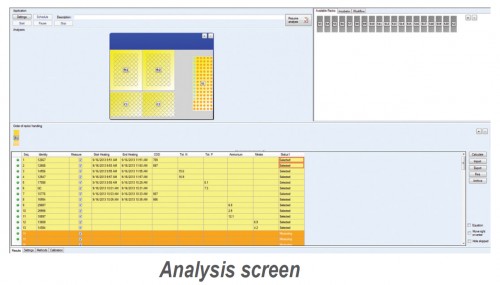
 RoboticAccess™ is designed as a flexible and multitasking program for controlling the Skalar robotic analyzers. While analyzing the samples, already obtained results are processed and new analyses can be prepared and scheduled. An access code and password are required before operation to prevent unauthorized operation and data modification.
The application files, which contain the instructions for the analyzers to perform the specifications, are pre-set in the software by Skalar, according to (inter) national regulations or can be in accordance with user defined requirements.
Runs can be easily started by selecting the required application and simply creating a user defined sample table by dragging the racks to the analyzer. When the sample table is completed and the analysis sequence is defined, the run can be started or scheduled for another start time. All applications can be programmed to be analyzed. The status of the running analysis can be followed on the screen and the results are displayed in real-time. During the run it is possible to add priority samples or exclude samples from measurement.
 Results can be printed in user defined print reports and exported to a txt, excel or LIMS. Finished runs can be archived as well as backed up and restored later.
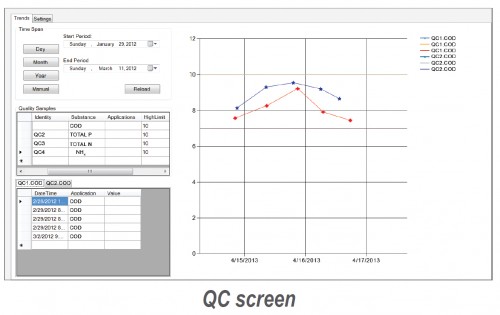
Integrated Quality Control features assure accurate results and full compliance with required regulations. QC samples can be analyzed and Quality Control charts together with other valuable statistical information can be created. Also CLP protocols can be included, which allow automatic actions of the Robot analyzer itself if QC and CLP limits are exceeded. This guarantees the production of highly accurate results and automatic quality control on the Robotic analyzer’s performance.



 sistemi Skalar Robotics sono configurabili ed equipaggiabili a misura del cliente, rispondendo alle esigenze più diverse. L'ottima qualità costruttiva e la completa flessibilità ne fanno un compagno ideale in ogni laboratorio di analisi. Gli strumenti sono configurabili con una capacità variabile di campioni e con diversi misuratori di parametri, i parametri di interesse possono essere analizzati contemporaneamente. Alcuni parametri: BOD, COD, pH, EC, Torbidità, Tutti i parametri da elettrodo iono-selettivi, Colore, Alcalinità, Parametri da titolazione